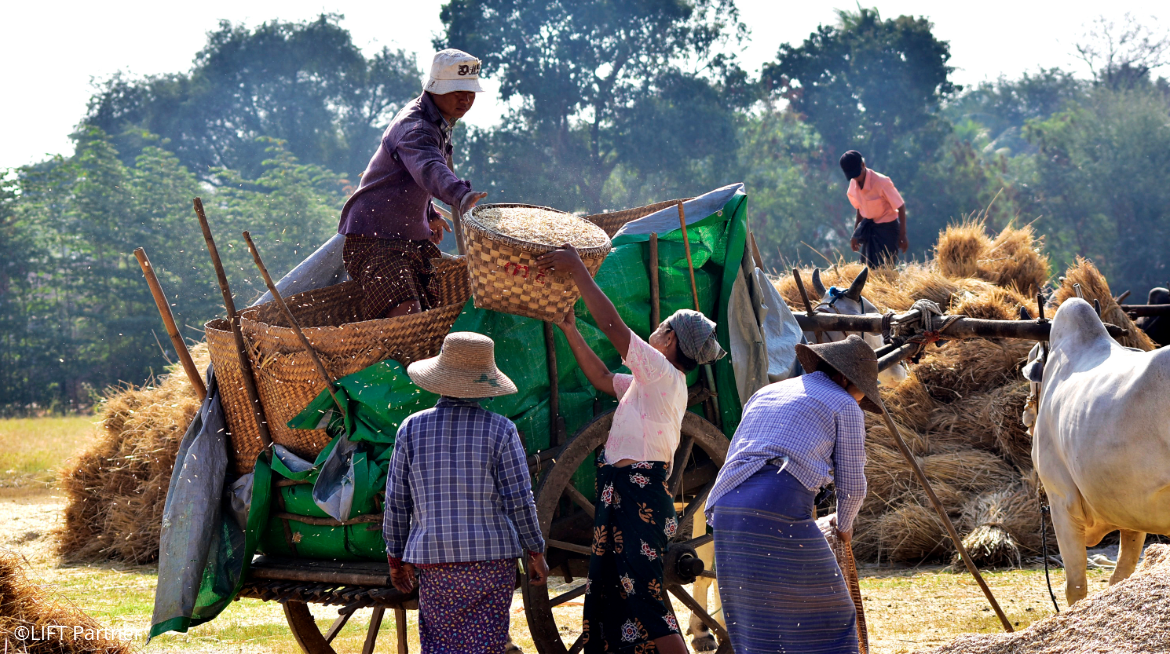
(12 May 2026, International Day of Plant Health) Plant health is often discussed in technical or mythical terms (e.g., a “green thumb”). But for farmers, it is something far more immediate. It affects whether crops grow well, whether income remains stable, and whether households can count on food from one season to the next. Nurturing healthy plants is both an art and a science.
Across Myanmar, questions about cultivating healthy crops in a changing environment are increasingly urgent. Changing weather patterns, rising temperatures, and environmental stress are making farming less predictable and harder to manage.
LIFT’s Climate Specialist described how these changes are already being felt on the ground. “We are seeing more irregular rainfall, delayed monsoons, and longer dry periods, especially in the Dry Zone,” he explained. “At the same time, flooding in delta areas is damaging crops and reducing yields.”
These are not just seasonal shifts. They are changing the way farmers make decisions and tend to their fields. When rainfall is uncertain and extreme weather events become common, planting cycles are harder to plan. Warmer temperatures can also create conditions in which pests and diseases spread more easily, adding yet another layer of risk.
What emerges is not a single challenge, but a combination of pressures that affect how crops grow and how dependable harvests can be.
And that dependability matters.
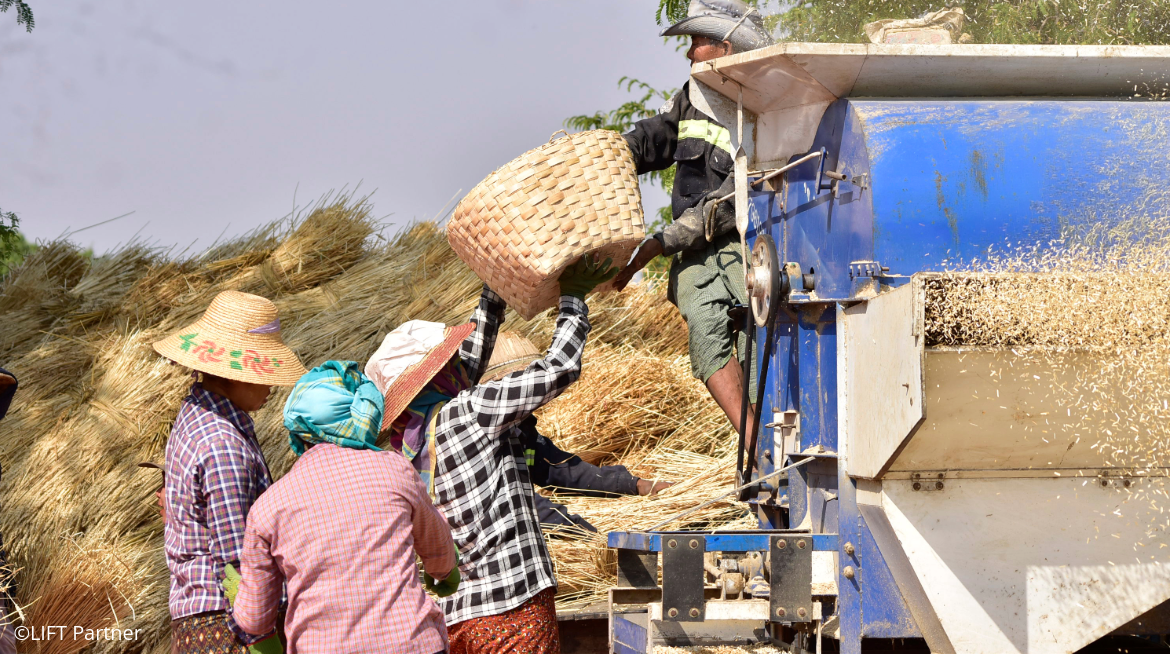
Up to 40 per cent of global crops are lost each year to pests and diseases (FAO). Behind that figure is a simple reality: when crops fail, the impact is immediate. Food becomes less available, and incomes fall.
LIFT’s Agriculture Specialist put it plainly, “plant health is fundamental because it determines yield, quality, and stability. When crops are healthy, farmers can produce more reliable food and earn a better income. When they are not, the effects are felt very quickly.”
For smallholder farmers, those effects are rarely limited to one season. Lower yields often mean higher costs, as farmers try to compensate by using more inputs. Over time, this can increase financial pressure, especially when harvests remain uncertain.
But focusing only on the outcome misses something important. Throughout the conversation, one message was clear: plant health is not determined by any single factor.
It is not only about seeds.
It is not only about soil.
It is not only about climate.
It is about all these elements working together.
“Plant health does not exist in isolation,” the Agriculture Specialist explained. “It is influenced by soil, water, climate, inputs, and even market access. If you improve one part without addressing the others, the overall impact is limited.”
This is where LIFT’s approach becomes especially relevant.
Rather than focusing on isolated interventions, programmes are designed to work across agricultural systems. That means combining access to quality seeds with better soil management, integrated pest and disease management, improving access to water alongside farmer training, and supporting practices that help farmers adapt to changing conditions.
From a climate perspective, this is also about resilience.
“A resilient agricultural system can absorb shocks and recover,” the Climate Specialist noted. “That includes having diversified crops, healthy soils, reliable water, and access to information, etc. We have to apply the Food System Thinking Concept and Approach, particularly working with a non-siloed approach.”
In practice, this may mean farmers using different crop varieties to spread risk, improving soil fertility over time, or accessing climate information that helps adjust planting decisions.
None of these actions is enough in isolation. But together, they can reduce uncertainty.
And uncertainty lies at the heart of the challenge.
For many farmers, the question is not simply how to increase production, but how to sustain it in the face of constant change. When crops become even slightly more reliable, the benefits go beyond yield. They affect planning, income stability, and confidence in the next season.
That is why plant health is increasingly understood not just as an agricultural issue, but as a foundation for resilience. This sentiment was echoed by both Specialists: “Healthy plants are one of the foundations of resilient communities.”
It is a simple statement, but it reflects a broader shift in thinking. Supporting plant health is not only about improving crops. It is about strengthening the systems that help farmers adapt, sustain their livelihoods, and continue producing food in a changing environment.