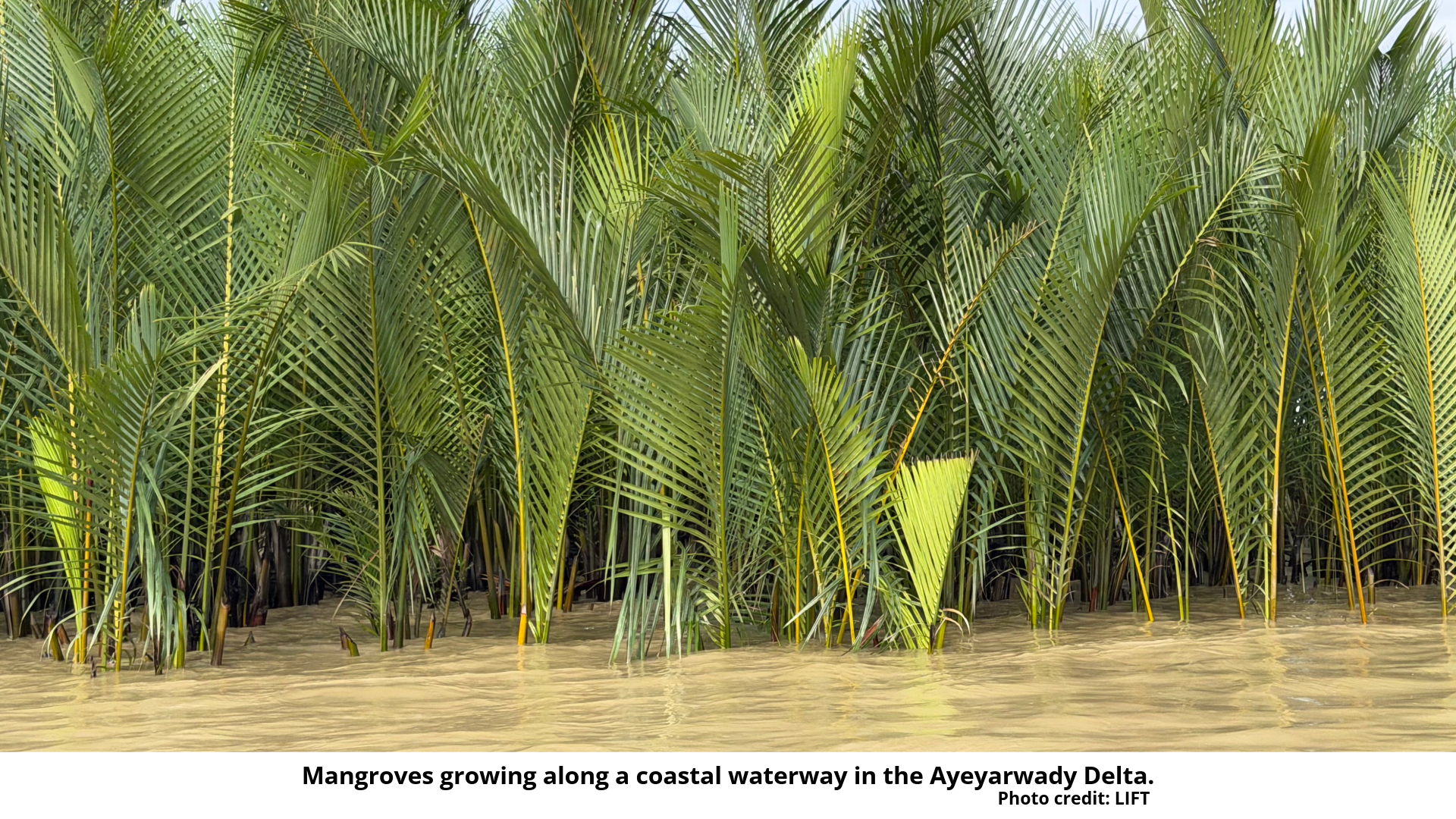
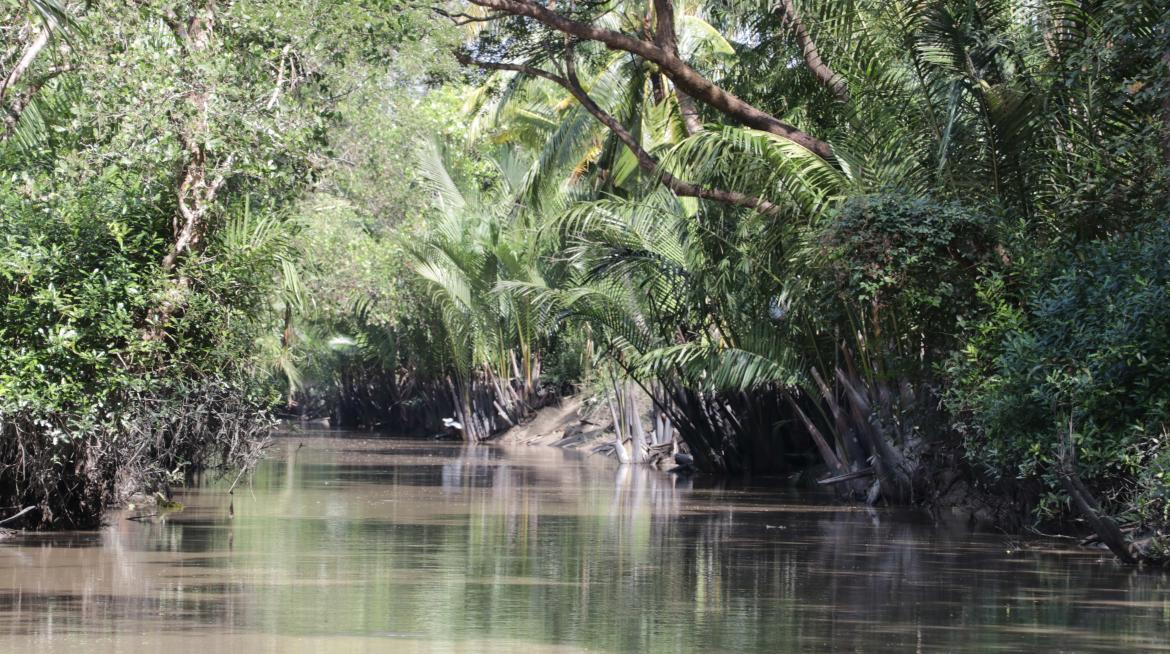
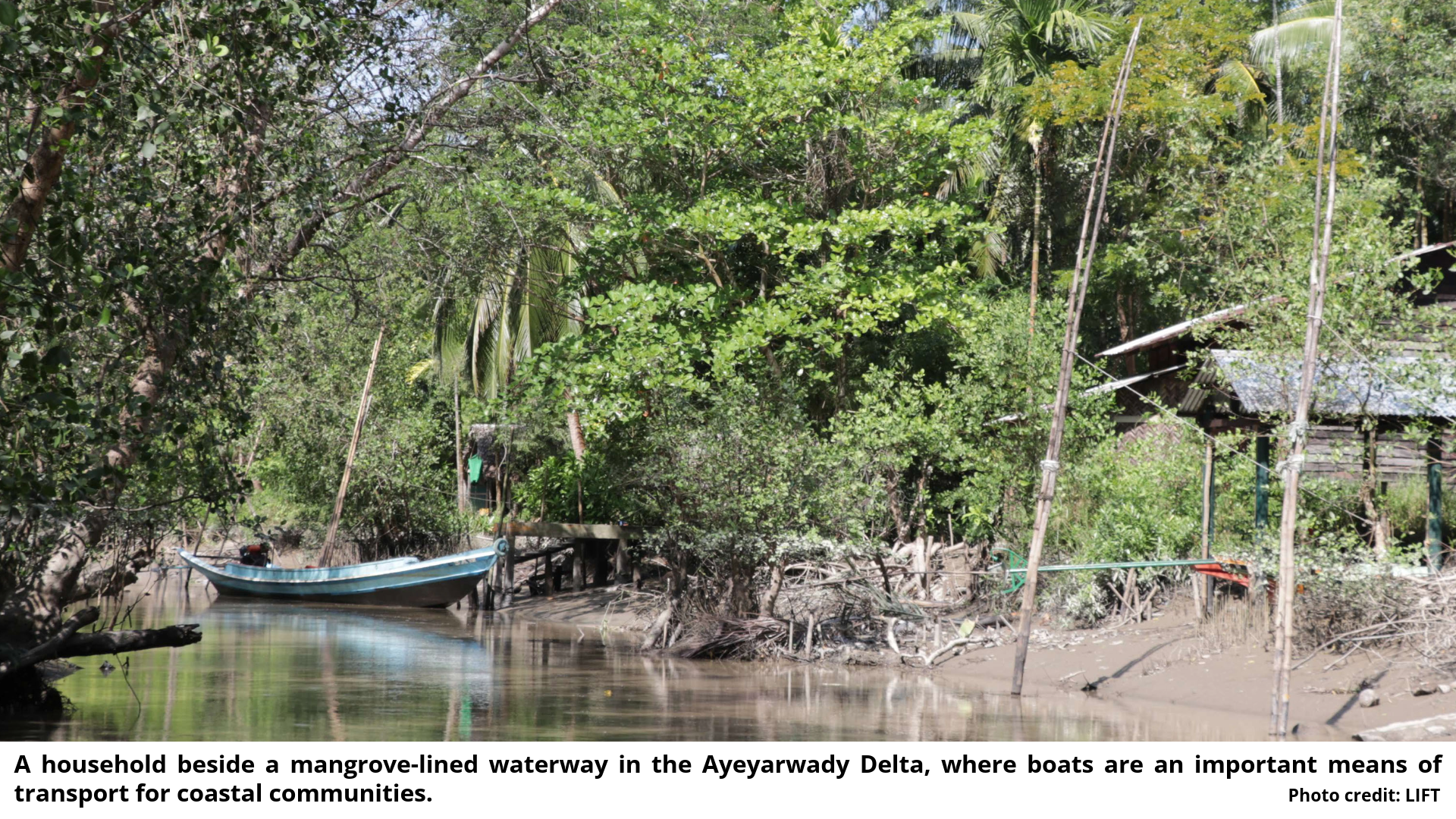
Mangrove forests are an important part of the food and livelihood systems of coastal communities in Myanmar's Ayeyarwady Delta.
Growing between land and sea, mangroves are adapted to tidal, saline conditions. Their root systems help stabilise sediment and reduce shoreline erosion while providing habitat for fish and other aquatic species. For nearby communities, the forests also provide resources for food, household needs, and income—including aquatic products, nipa palm, honey, medicinal plants, and fuelwood. These resources support household food and energy needs and can also provide income.
These resources are often used alongside fishing, agriculture and seasonal labour as part of household livelihood strategies.
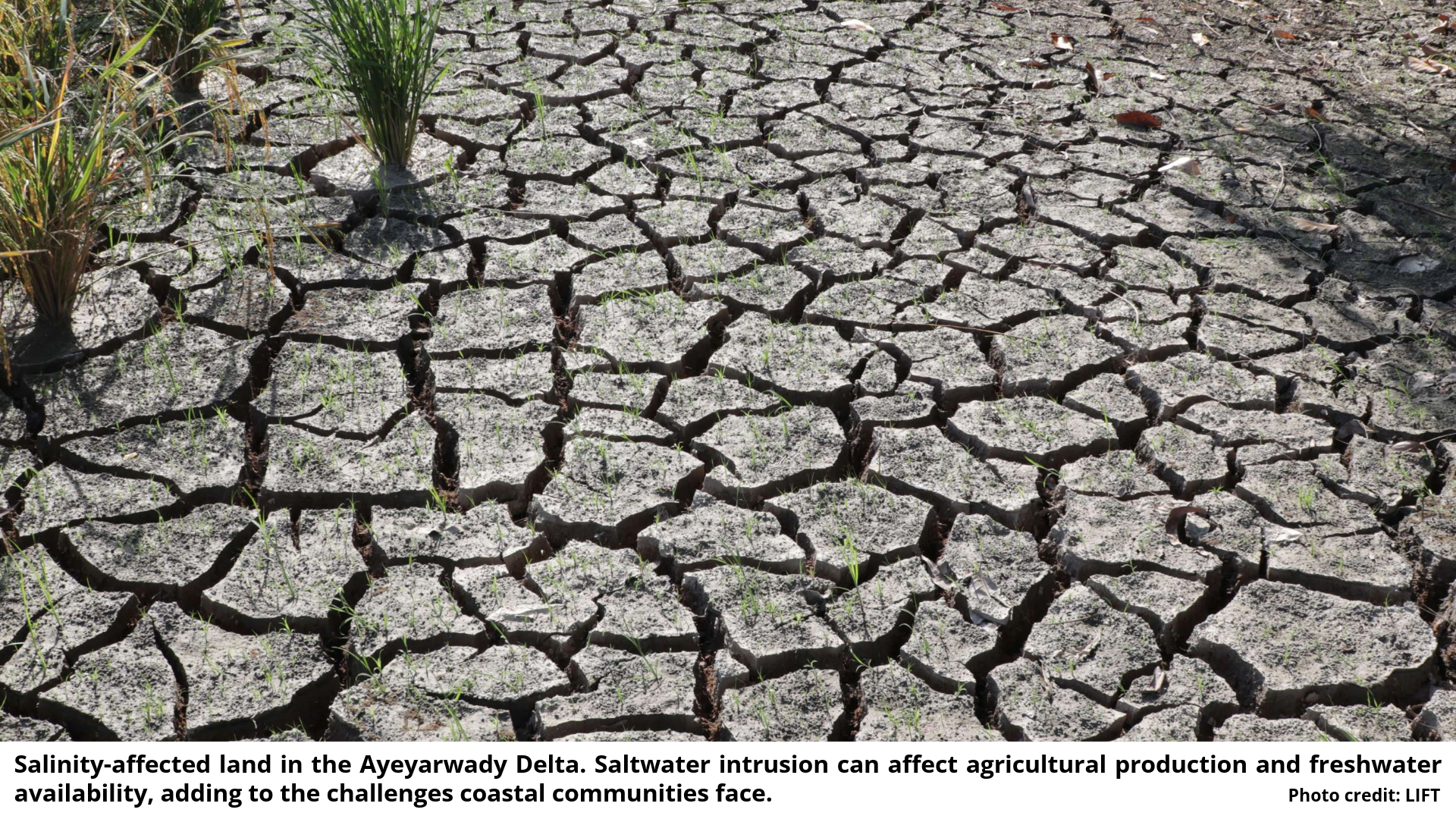
Mangrove-dependent communities face a range of pressures, including salinity intrusion, erosion, extreme weather and the degradation of natural resources. These pressures affect both the ecosystems communities rely on and their ability to maintain food and livelihood sources. Limited market connections and access to technical knowledge also constrain opportunities to earn income from mangrove products while managing them sustainably.
Investing in the recovery and sustainable use of mangroves
Through partners, LIFT is supporting communities living in and around mangrove forests to strengthen their livelihoods and use natural resources more sustainably, which local food production and household incomes depend on.
Agricultural and livelihood activities are connected with community management of these resources. This includes supporting communities to maintain productive landscapes, strengthen local management practices and reduce pressures on the natural systems that contribute to food production and livelihoods.
The work also builds on knowledge that already exists within communities. Local harvesters have considerable traditional knowledge of mangrove environments, while also identifying gaps in knowledge of sustainable harvesting techniques, regeneration, and resource management.
Some communities already use measures such as rotational collection areas, restrictions on cutting young trees, and seasonal limits on collecting particular resources. However, these practices are not consistently applied.
Project support is strengthening practical knowledge of sustainable harvesting, community resource monitoring and local management systems, while increasing opportunities for women and other community members to participate in decisions over natural resources.
Connecting natural resources, food and livelihoods
For households that depend on mangrove environments, protecting the resource base is closely linked to maintaining food and income sources.
Aquatic species associated with mangrove environments contribute to local diets and markets, while households use other forest products or sell them. Mangroves can also reduce shoreline erosion and provide some protection from coastal hazards.
At the same time, households in these areas face flooding, increasing salinity in soil and water, and limited access to freshwater. These pressures affect agriculture, natural resources and household food security.
LIFT's support therefore extends beyond restoration. It is designed to strengthen livelihoods and market opportunities, improve household nutrition and water security, support women's participation, and improve community preparedness for climate and disaster risks.
By linking these areas of work, the programme aims to ensure that efforts to restore mangroves also contribute to the longer-term food security and livelihoods of the people who depend on them.