
Original Article Available at :
For households that raise chickens, ducks or fish, feeding animals is part of farming. It is also a recurring cost.
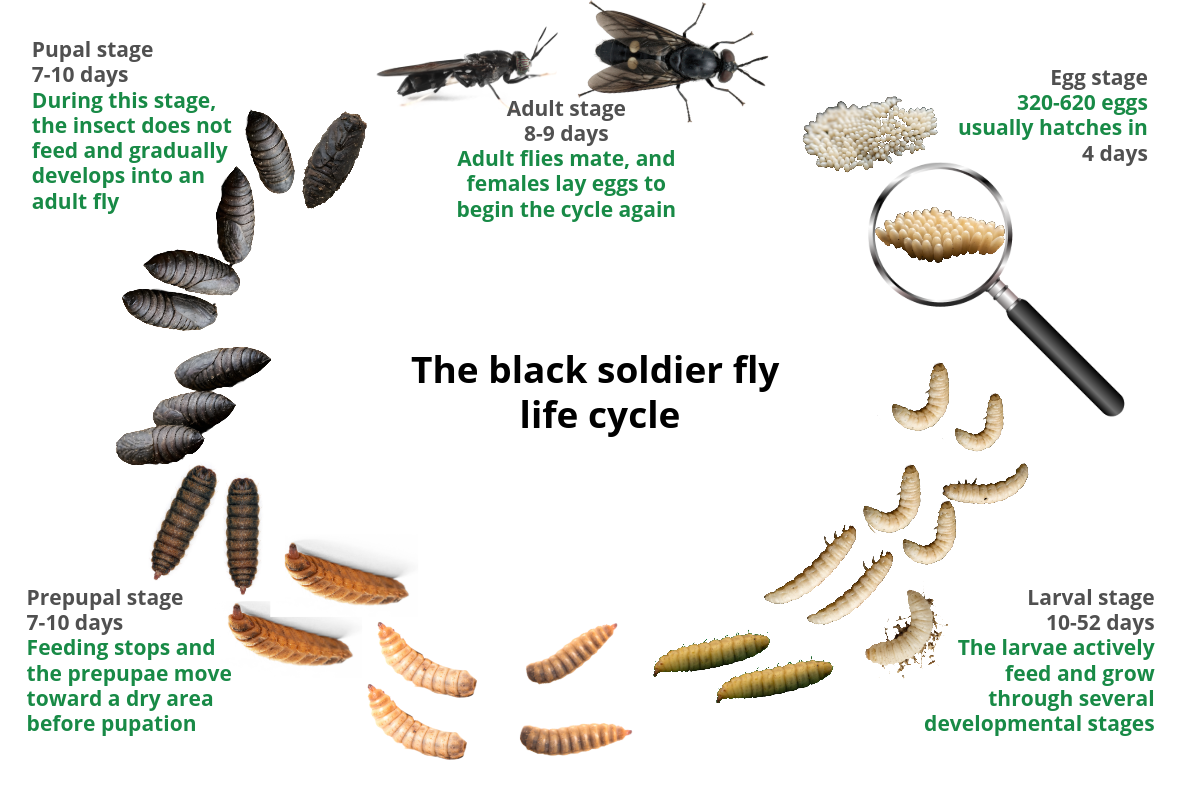
But some materials available around a farm can also serve another purpose. Black soldier fly (Hermetia Illucens) larvae can feed on different types of organic material, converting it into larval biomass containing protein, fat and other nutrients. This has led to growing interest in their use in animal feed, including for poultry and fish. Research has examined their potential in different livestock and aquaculture systems, as well as their role in making productive use of farm organic materials and agricultural residues.
LIFT has supported research and education on black soldier flies in Myanmar since 2018. Today, LIFT-funded activities build on this experience by helping farmers learn to raise the larvae and incorporate them into existing farming practices. The approach connects two practical questions for farming households: how to put locally available resources to productive use, and how farmers can produce an additional source of animal feed.
A small insect with a role in farming
Black soldier fly larvae are also being explored beyond animal feed. Where appropriate production, processing and food-safety practices are in place, the larvae can also be processed for human consumption as a protein source. One researcher previously supported through LIFT-funded work is now producing black soldier fly larvae for this purpose.
As the larvae grow, they consume suitable organic materials and convert these into their own body mass. The resulting larvae contain protein and fat, though their nutritional composition varies depending on factors such as what they are raised on and how they are processed.
This ability to turn one resource into another creates an interesting connection. Materials that might otherwise have limited use can become an input for producing larvae, which can in turn feed fish, poultry, and other animals.
Rather than replacing all conventional animal feed, producers can incorporate black soldier fly larvae into feeding systems based on the animal, available resources, and production practices. Research has examined their use in both poultry and aquaculture, including as a partial substitute for conventional protein ingredients.
For U Aung Htay (name changed), a 66-year-old farmer supporting a family of three through five acres of farmland, black soldier fly production was completely new.
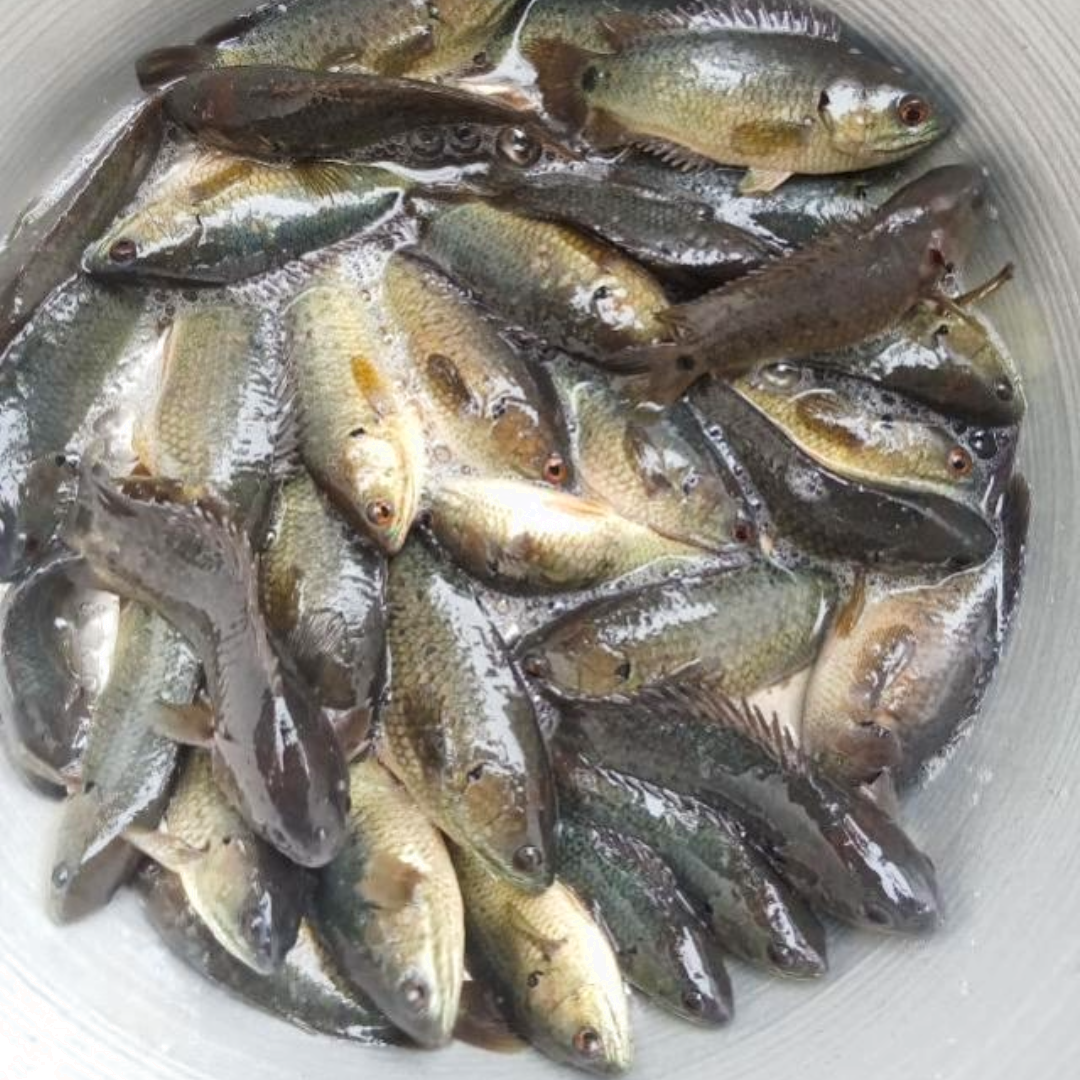
Before participating in the LIFT-funded project, he raised local fish species on a small scale for household consumption and additional income. Through the project, implemented by one of the LIFT’s partners, he received 7,000 climbing fish fingerlings, an initial supply of black soldier fly larvae and materials to begin production. He also received continued coaching on breeding the flies, collecting eggs, managing the larvae and using them as fish feed.
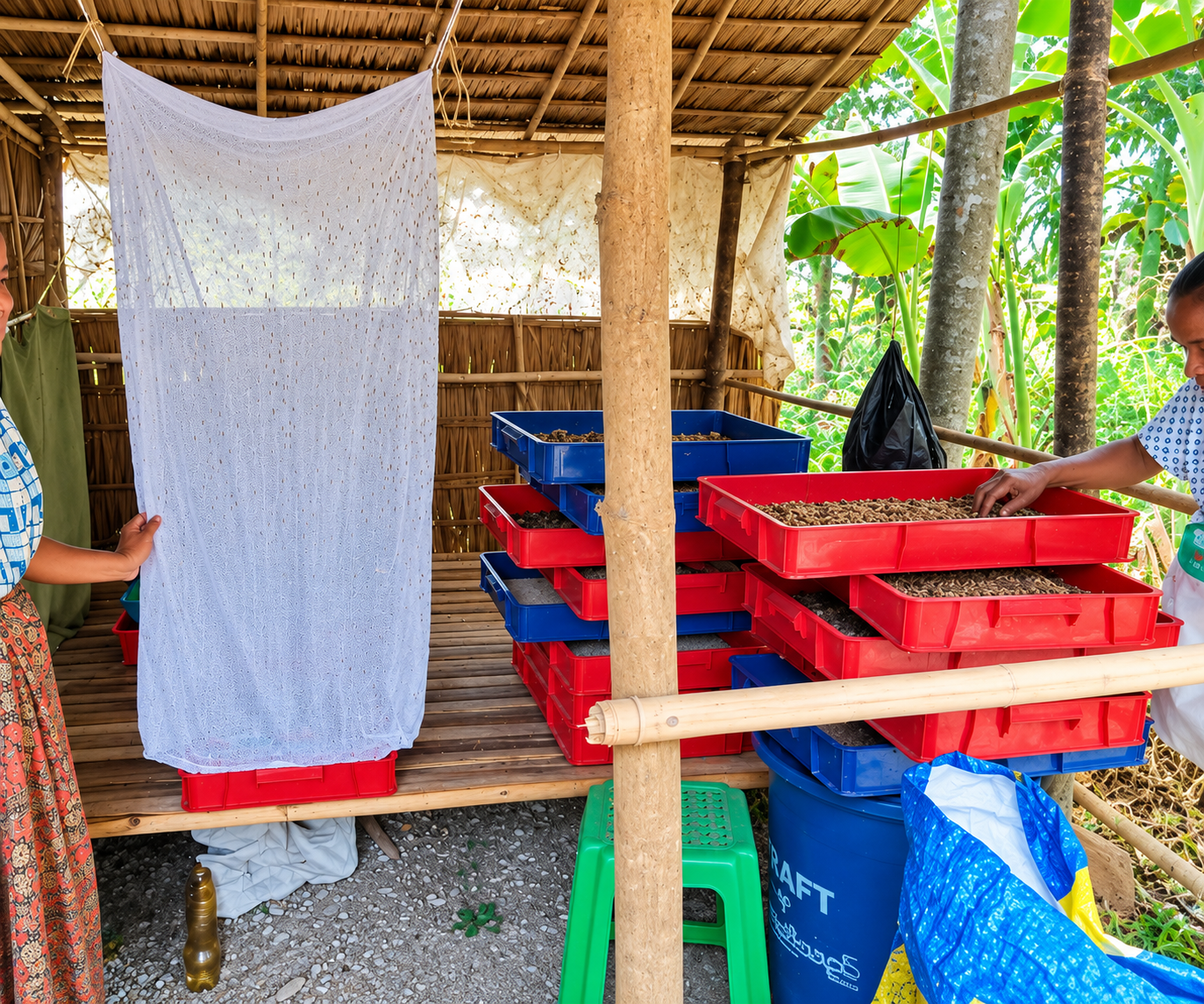
Producing the larvae involved learning by doing. Egg production increased in the first months as his experience grew, while extreme heat and ant infestation later affected production. These challenges are key to understanding what it takes to maintain black soldier fly production under real farm conditions.
Connecting locally produced feed with fish farming
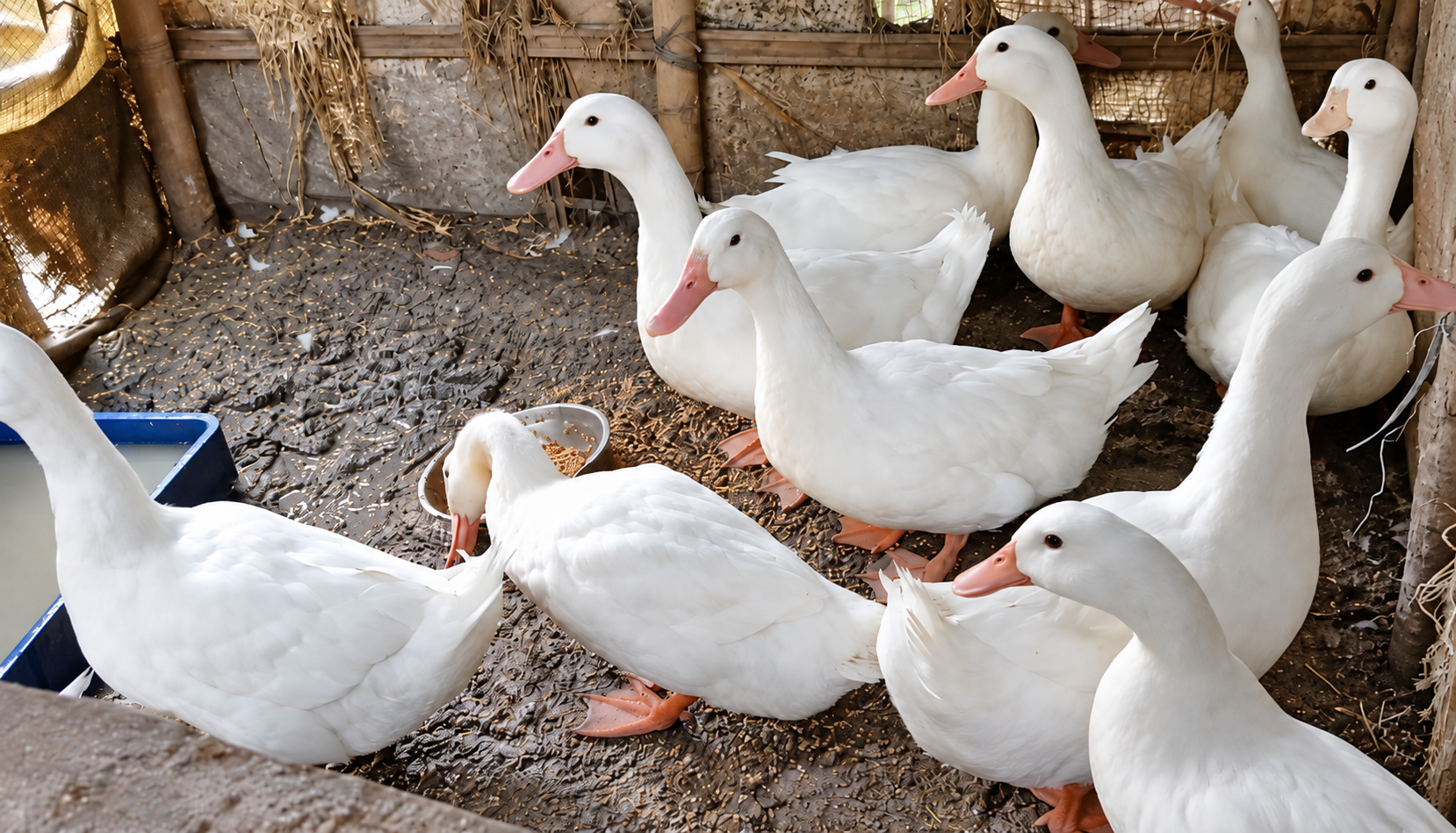
U Aung Htay began feeding the larvae directly to his fish, adjusting the amount and frequency according to fish size. He also started using the larvae for chickens and ducks raised at home.
For him, one benefit has been reduced reliance on purchased animal feed.
“After receiving the training, I understood that black soldier fly can reduce feed costs and improve fish growth,” said U Aung Htay.
The fish were initially stocked at approximately 6.5 to 8.2 grams each. Farm records later documented some fish weighing more than 114 grams.
These figures show the growth recorded during the farming period, but they should not be interpreted as evidence that black soldier fly larvae alone caused that growth. The overall diet, feeding practices, management and environmental conditions influence fish growth.
The experience does show how a farmer can integrate black soldier fly production with an existing livelihood activity: producing larvae on the farm and using them as an additional feed source for fish and other animals.
Testing the approach with poultry
Researchers are also exploring black soldier fly larvae for poultry feed.
In a previously funded LIFT project, researchers divided Myanmar indigenous chickens of similar age and size into two groups. One group continued with the conventional feeding practice using rice bran and broken rice, while the other received black soldier fly larvae in addition to its feeding regime. The chickens receiving larvae were given seven larvae per chicken each day, and the two groups were compared over six months.
The demonstration gives farmers a practical way to see how the approach performs alongside familiar feeding practices, rather than relying only on training information.
This kind of on-farm testing is particularly useful because animal performance cannot be separated from the way feed is produced and used. International research has similarly shown that results with black soldier fly larvae vary by factors including animal species, inclusion level, processing, and the composition of the wider feed ration.
For smallholder farmers, however, the approach's value depends on whether it works under local conditions. Farmers need to produce the larvae consistently, manage challenges such as temperature and pests, and use appropriate rearing materials.
The material used to raise the larvae also matters. Research shows that nutritional composition changes with diet, while unsuitable or contaminated substrates can raise feed-safety concerns.
This makes appropriate production practices and technical knowledge essential.
Building practical options for farming households
Black soldier fly production is not intended to replace every source of animal feed. Instead, it gives participating farmers another option: producing an additional feed resource that can support livestock, poultry, or fish farming.
For farmers such as U Aung Htay, that connection is already taking shape at household level. Farmers are applying knowledge gained through training to fish production and to chickens and ducks raised at home, while farm experience shows where the approach works and where further learning is needed.
Through its partners, LIFT is supporting farmers to test approaches such as black soldier fly production as part of broader efforts to strengthen agricultural livelihoods, use locally available resources more productively, and reduce reliance on external inputs where possible.
By connecting resources already available around farms with the everyday need to feed animals, the approach offers a practical example of how more resource-efficient farming can begin at the household level.